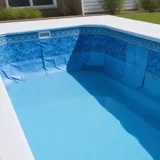
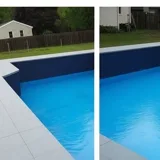
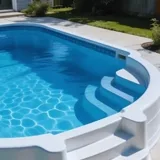
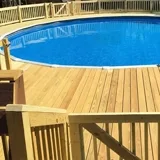
Rust on a pool wall is either a surface nuisance or the beginning of a structural failure, and from above the water you cannot tell which. The difference decides whether you spend a few hundred dollars or several thousand.
Where it starts
Steel walls are coated, and the coating fails where the wall was cut: around the skimmer and return openings, the light, the step panels and along the base where water sits. Once bare steel is exposed, rust expands as it forms, which lifts the liner, stains it, and eventually perforates the panel.
Surface corrosion vs panel failure
- Surface corrosion: rust is on the face, the metal still feels solid, no bulging
- Early failure: pitting you can feel, paint lifting in sheets, light bulging
- Failure: the panel flexes under hand pressure, holes are visible, the wall has moved
The first is treated and coated as part of a liner replacement. The second is usually treated if caught early. The third is panel replacement, which is structural: in Raleigh that scope requires a City of Raleigh permit and inspection.
What it costs
Wall treatment and coating happens inside a normal liner job. Itemised wall and spot repairs sit around $150 to $600. Panel replacement is quoted separately because it involves cutting, refastening and often a concrete collar, and it is the repair that most often turns a liner quote into a construction job.
Why it happens faster here
Drainage. Water held against a wall by clay-heavy soil keeps the steel wet for longer, and a leaking liner or gasket keeps resupplying it. Fixing the wall without fixing the water source is the most common repeat repair in this trade.
Frequently asked questions
Can rusted pool walls be repaired without replacing the liner?
Rust is only fully visible with the liner out. Surface corrosion can be treated in place; anything structural means the liner comes out for panel work.
Does wall panel replacement need a permit in Raleigh?
Yes. Replacing wall panels or changing the shell requires a City of Raleigh permit and inspection. Treating and coating sound panels during a liner replacement is maintenance.
How much does pool wall repair cost?
Spot and wall repairs run around $150 to $600 in published figures. Panel replacement depends on how many panels and how much refastening is needed, and it is quoted separately.